Porcelain and ceramic tiles are popular options because of their durability and range of available designs.
When selecting flooring, consider slip resistance, maintenance requirements, and compatibility with the existing subfloor.
Refresh the Walls and Paint
A fresh coat of suitable bathroom paint can make an older space look cleaner and brighter. Neutral colors, light shades, and coordinated finishes can help create a timeless appearance.
Before painting, repair damaged surfaces and address any underlying moisture problems.
What Is Included in a Full Bathroom Renovation?
The scope of a full bathroom remodel depends on the condition of the existing room and the homeowner’s goals. A typical project may include:
• Removing selected existing fixtures and finishes
• Repairing or preparing walls and subfloors
• Installing new flooring and tile
• Replacing the vanity, sink, and countertop
• Installing a new toilet, bathtub, or shower
• Updating plumbing and electrical components as needed
• Installing mirrors, lighting, and accessories
• Painting and completing final finishing work
• Cleaning the work area and inspecting the completed installation
Not every project requires all these services. Before construction begins, confirm which tasks, materials, disposal costs, permits, and inspections are included in the contractor’s written estimate.
How to Plan Your Bathroom Remodeling Project
Careful planning can help reduce unexpected expenses and avoid unnecessary changes during construction.
Step 1: Establish Your Priorities
Decide what you want to improve. Is your main concern outdated fixtures, insufficient storage, damaged flooring, or a complete change in appearance?
Separating essential repairs from optional upgrades can help you allocate your budget more effectively.
Step 2: Set a Realistic Budget
Determine how much you can comfortably spend on the renovation. Request estimates based on the actual scope of work rather than relying only on general online averages.
It is also wise to reserve part of your budget for unexpected repairs. The appropriate contingency depends on the age and condition of the bathroom.
Step 3: Select Materials Before Construction
Choose your preferred flooring, tile, vanity, fixtures, and other finishes as early as practical. Confirm product availability and delivery times before scheduling installation.
Making major material decisions early can help prevent delays and keep the project organized.
Step 4: Compare Written Contractor Estimates
When reviewing estimates, look beyond the total price. Make sure each proposal explains the work to be performed, materials included, exclusions, payment schedule, and how additional work will be approved.
Comparing similar scopes makes it easier to understand differences between proposals.
Step 5: Confirm Permits and Requirements
Depending on the location and scope of the project, permits or inspections may be required, particularly when plumbing, electrical systems, or structural components are modified.
Ask your contractor which requirements apply and verify them with the relevant local authority before work begins.
Common Bathroom Remodeling Mistakes to Avoid
Homeowners can prevent many problems by addressing important details before construction begins.
Choosing materials based only on appearance: Attractive finishes should also be appropriate for wet environments and practical for everyday use.
Ignoring ventilation: Effective bathroom ventilation helps manage moisture and reduce the risk of persistent condensation and mold growth.
Underestimating hidden repairs: Older bathrooms may have damaged subfloors, leaking plumbing, or deteriorated materials behind finished surfaces.
Changing the design during construction: Late changes can increase costs and cause delays, especially when plumbing, tile, or custom materials are involved.
Selecting a contractor based only on price: Consider the written scope, relevant experience, communication, references, and applicable licensing and insurance requirements alongside the price.
Bathroom Remodeling in Pittsburgh: Costs, Design Ideas, and What to Expect in 2026
Planning a bathroom remodel in Pittsburgh? Whether you want to update an outdated bathroom, replace an old bathtub, or create a modern walk-in shower, understanding the remodeling process can help you make better decisions and manage your budget.
Bathroom remodeling is one of the most effective ways to improve the comfort, functionality, and appearance of your home. However, the final cost depends on several factors, including the size of the bathroom, the materials you choose, plumbing requirements, and the amount of construction work involved.
In this guide, Harmoniq Homes explains the key considerations for planning a bathroom renovation in Pittsburgh, Pennsylvania, including budgeting, design ideas, material selection, and choosing the right contractor.
How Much Does Bathroom Remodeling Cost in Pittsburgh?
Bathroom remodeling costs vary significantly depending on the scope of work. A simple cosmetic update generally costs less than a complete renovation involving demolition, plumbing modifications, new tile, and upgraded fixtures.
For planning purposes, some Pittsburgh-area contractors publish estimates ranging from approximately $8,000 to $40,000 for common bathroom remodeling projects, with larger or more customized renovations potentially costing more. These figures are general estimates, not guaranteed quotes. See a Pittsburgh-area cost guide (https://www.quinlancontracting.com/blog/how-much-does-a-bathroom-remodel-cost-in-pittsburgh).
Factors That Affect Your Remodeling Budget
1. Bathroom size
Larger bathrooms generally require more flooring, tile, paint, and other materials. However, a small bathroom can still be expensive to renovate if it requires extensive plumbing work or custom finishes.
2. Material selection
Materials can have a significant impact on your budget. Ceramic tile, porcelain tile, natural stone, prefabricated vanities, and custom cabinetry all have different costs.
Choosing durable, attractive materials that fit your budget can help you achieve a beautiful result without unnecessary expenses.
3. Plumbing and electrical work
Keeping your existing toilet, sink, and shower locations can help control costs. Moving plumbing lines or installing new electrical circuits may increase labor and material expenses.
4. Demolition and hidden damage
Once old flooring, tile, or walls are removed, contractors may discover water damage, deteriorated wood, or other issues that were not visible before demolition. These repairs can affect both the budget and project timeline.
5. Labor and project complexity
Installing a standard vanity is generally less complicated than building a custom tiled shower. Detailed tile patterns, specialized finishes, and structural changes may require additional labor.
Popular Bathroom Remodeling Ideas for Pittsburgh Homes
A successful bathroom renovation should balance appearance, functionality, durability, and maintenance.
Create a Modern Walk-In Shower
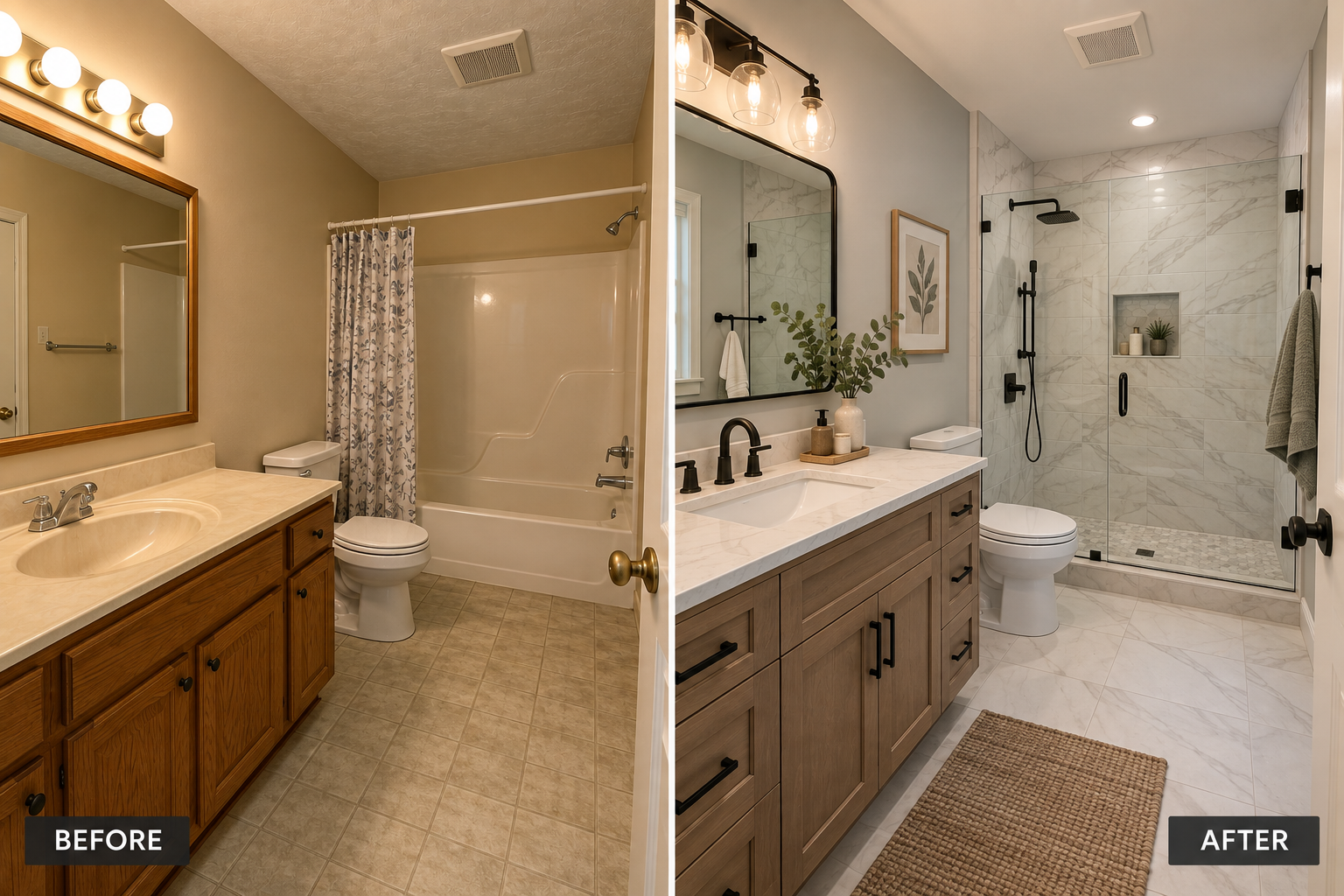
Walk-in showers can give a bathroom a more open and contemporary appearance. Glass enclosures, attractive tile, and well-planned storage can improve the overall design.
Proper waterproofing and drainage are essential. These elements help protect the surrounding structure from moisture damage and should be considered before choosing decorative finishes.
Upgrade Your Vanity and Storage
A new vanity can transform the appearance of an outdated bathroom. Consider the available space, storage requirements, countertop material, and style of the fixtures.
For smaller bathrooms, wall-mounted storage and compact vanities may help make the room feel more spacious.
Improve Lighting
Good lighting makes a bathroom more comfortable and functional. Consider combining general lighting with task lighting around the mirror.
Lighting fixtures should be appropriate for their bathroom locations, and electrical work should comply with applicable requirements.
Choose Durable Flooring
Bathroom floors must withstand regular moisture and cleaning.
Why Choose Harmoniq Homes for Your Bathroom Renovation?
At Harmoniq Homes, we understand that home improvement projects require thoughtful planning, quality workmanship, and clear communication.
Our home renovation and remodeling services help Pittsburgh-area homeowners improve their living spaces through practical solutions tailored to their needs and budgets.
Whether you are planning a bathroom update, replacing damaged finishes, improving your home’s interior, or considering a larger renovation, our goal is to help you understand your options and plan your project with confidence.
Every home is different, so the best starting point is a discussion about your goals, the existing conditions, and the scope of work you have in mind.
Start Planning Your Bathroom Remodel in Pittsburgh
A well-planned bathroom renovation can improve the comfort, functionality, and appearance of your home. By establishing a realistic budget, selecting suitable materials, and understanding the construction process, you can make informed decisions throughout the project.
If you are considering a bathroom renovation in Pittsburgh or the surrounding communities, contact Harmoniq Homes to discuss your project and request an estimate.
Harmoniq Homes — Your One Step Renovation Specialist.